martes, 20 de octubre de 2026

lunes, 19 de octubre de 2026
Moracantana III.

HAEC TERRA AD DAMONAM PERTINET, DEAM AQVARUM ET FONTIVM. QVICVMQVE ALIQVID DESIDERAT, ALIQVID VICISSIM OFFERE DEBET.
It was Latin, the ancient language of Romans. The workers stopped digging and looked for the priest of the town, who was able to read and understand it. The translation was something like that:
"This land belongs to Damona, godess of water and fountains. The one who wants something must offer something in return"
"This is a votive stone" the priest said. "Someone buried it many time ago. It talks about Damona, a pagan godess. The text is like a threat: it says that if you want to dig a well, you must offer something in return. Old Celts used to offer gold, silver coins, animals... Even human sacrifices!! But we are not pagans. As Christians and Catholics, we do not believe in such nonsenses".
After that, the priest took a pickaxe and stroke the rock. "Carry on, my sons" he said. "Dig the well deep and wide, and do not be afraid of old inscriptions. God is with us!!!" The workers followed him and started to beat the rock. The rock resisted. They tried with iron levers, lifting the stone about 5 centimeters. "Pull!!! Pull!!! Pull!! Nothing. Finally someone brought a yoke of oxen, and with the strenght of the animals they finally could move the rock. What they saw underneath froze them.
jueves, 15 de octubre de 2026
Jack - O' - lantern contest.

1st category: Pre - school (3, 4 and 5 years old)
2nd category: 1st, 2nd and 3rd grades.
3rd category: 4th, 5th and 6th grades.
You will hand over your Jack O'lantern to your master teacher. Do not forget to write a nickname and the grade you belong to at the bottom of the pumpkin with a permanent marker. On Friday, the 30th, we will announce the winners, presenting the prizes to them.
 |
| Top ranked competitor reward in 3rd category. |
The criteria for evaluating the pumpkins are the following ones:
1.- Originality and Creativity: 3 points.
2.- Carving quality: 3 points.
3.- Lighting of the pumpkin: 2 points.
4.- Wow* effect: 2 points.
(*) Note: Wow effect is about visual impact and about how the artwork awakes emotions.
miércoles, 14 de octubre de 2026
Moracantana II.
 |
| Celtic well, still in use today. |
 |
| Celtic human sacrifice. |

In accordance with our Extremadurian tradition, the Moracantana is a female magical being with supernatural powers. Sometines it can take the shape of a thing half woman, half snake; other times it's an old and ugly witch; and there are also references about a very beautiful girl who bewitches men and children, causing them to drown.
And what this have to do with Santa Amalia?
Well, in the next installment you will discover it. You'll find out why the 3 wells of Santa Amalia were primarily aligned, and then sealed. And you'll know why a 4th one, which was in the middle of the square, was directly destroyed.
Moracantana I. Halloween story. 2026.

Apart of private wells, there were public wells in Santa Amalia. These ones were bigger, and even older. Today we still have three of them. One in Valdehornillos avenue (1); other one in Magdalena street (2). And finally one more in La Bomba path (3). All them are sealed: one with concrete; and the other 2 ones with metal grids. And this is because, although wells are good things that provide water, they are also dark and deep. Because in a well people can drown. And because, and particularly in these three wells, there was something that attracted children, inviting them to jump down into the black waters.


Halloween 2026. A couple of stories about dolls.

This story is completely real. One day, many time ago, me and my sister were in the living room. My parents weren’t at home. My sister was watching TV and I went to her bedroom to pick a book. Next to the book there was a doll. And her 2 eyes opened. The next night I went to get the book again and the doll had closed one of her eyes. And I ran to get the phone and I called my parents.
Two dolls in Mª Luisa park.
Another real story. Last weekend, at 9 pm, many people saw two dolls in Mª Luisa park. One of them was sitting on a swing; and the other was climbing the olive tree. Next day the dolls weren't there anymore.
lunes, 28 de septiembre de 2026
5 WONDERS OF EUROPE. TEACHER'S RANKING.
Today I want to talk you about what are, in my opinion, the 5 wonders of Europe, in terms of architecture. It is a selction of the most beautiful and emblematic buildings in our continent. Let's go.

Stonehenge is a mysterious circle of enormous stones built 5000 years ago. The stones were brought from far away (more than 100 kms). Archeologists think that Stonehenge was a solar calendar, like an astronomical observatory.
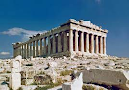
Ancient Greek people built this amazing temple 2500 years ago. It was dedicated to Athena, the goddess of wisdom. It is completely made of white pure marble, and originally it was decorated with beautiful statues. Today those statues are in the British Museum (London).

In Granada (south Spain) we can find one of the most beautiful palaces ever built. It is a great complex where you can find gardens, amazing halls, towers, water reservoirs... It was developed by muslim kings of Granada. There is a great variety of decorations which make this palace one of the finest ones in the world.

Ancient Romans love fighting spectacles; and with that purpose they built this great construction 2000 years ago. It could keep 70.000 people inside. There were gladiator fighting, animal fighting... Even they used to celebrate ship fighting (they flooded the inner space with water, and then two or more ships battled between them)

In Istambul, city of Turkey, we can find the most amazing construction of all Europe. 1400 years ago emperor Constantine decided to raise the greatest church ever built. He tried and fail many times; but finally he succeded, giving us Hagia Sophia. A great an original church with one of the greatest domes ever done.
martes, 9 de junio de 2026
Materials. 5th grade. Vocabulary.

Metals:
- Gold
- Silver
- Bronze
- Copper
- Tin
- Iron
- Steel
- Brass
- Aluminium
- Lead (Carefull with the pronunciation of this word. We talk about it tomorrow)
- Zinc
- Wool
- Cotton
- Silk
- Velvet
- Linen
- Cement
- Concrete
- Tile (Floor tile, Wall tile, Roof tile)
- Clay
- Rock
- Granite
- Slate
- Limestone
- Marble
- Wood
- Plaster
- Feather
- Leather
- Rubber
- Plastic
- Coal
- Glass
- Ivory
- Crystal
- Wax
- Reeds
miércoles, 3 de junio de 2026
martes, 2 de junio de 2026
Materials: 5th grade A.
PAPER SHAPPIRE SILVER
WOOD TITANIUM BRONZE
RUBBER MERCURY COPPER
IRON OBSIDIAN STEEL
DIAMOND QUARTZ MAGNET
GOLD CRYSTAL PUMICE
EMERALD GLASS GRANITE
PLASTIC COAL SLATE
RUBI CARBON FIBER LIMESTONE
METAL ALUMINIUM MARBLE
WIRE LEAD THREAD WAX CEMENT CLAY
COTTON, POLYESTER, WOOL, SILK, LEATHER
BRASS